Webinar archive

Clear filters

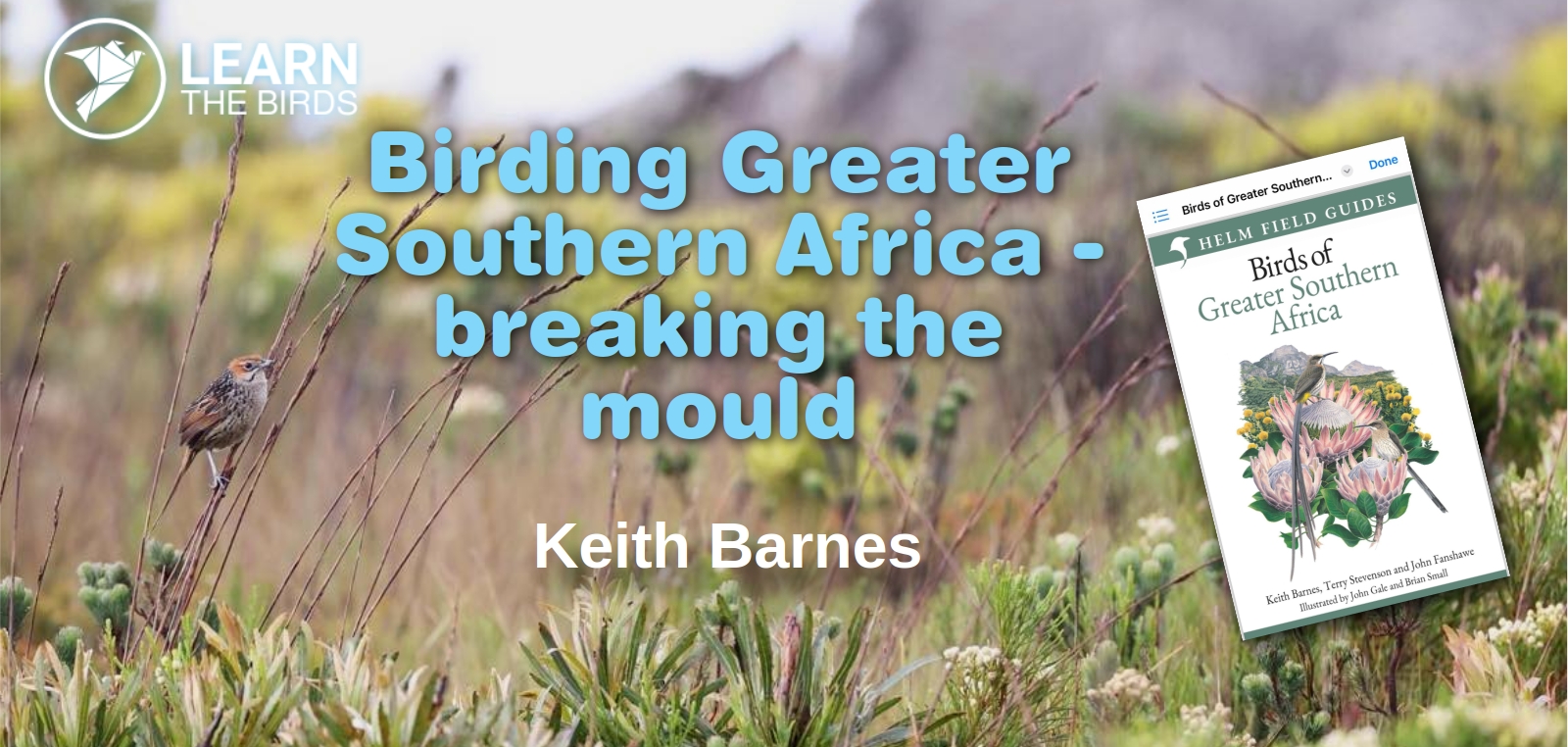
Keith Barnes

Keith Barnes, an owner of Tropical Birding, has birded Africa and the world far and wide. When the pandemic tried to stop him, he worked on a fieldguide to Greater Southern Africa, including Zambia, Malawi and Mozambique. Join us to learn more about it.
View speaker page

Paul Baicich

Paul J. Baicich has been an active birder since his early teens in New York City.  His interests include bird conservation and policy, as well as studies in avian breeding biology, waterfowl ecology, and the practice of bird feeding over the decades. Among his many activities, he worked for the American Birding Association in multiple roles, has worked for the National Wildlife Refuge System on a consultant basis on issues of popular birding and parallel refuge receptiveness, and has led (or co-led) trips from Alaska to Cuba. In addition, Paul co-edits (with Wayne Petersen) the popular monthly Birding Community E-bulletin. In 2014, Paul received the Ducks Unlimited “Wetland Conservation Achievement Award” in the category of Communications.
View speaker page

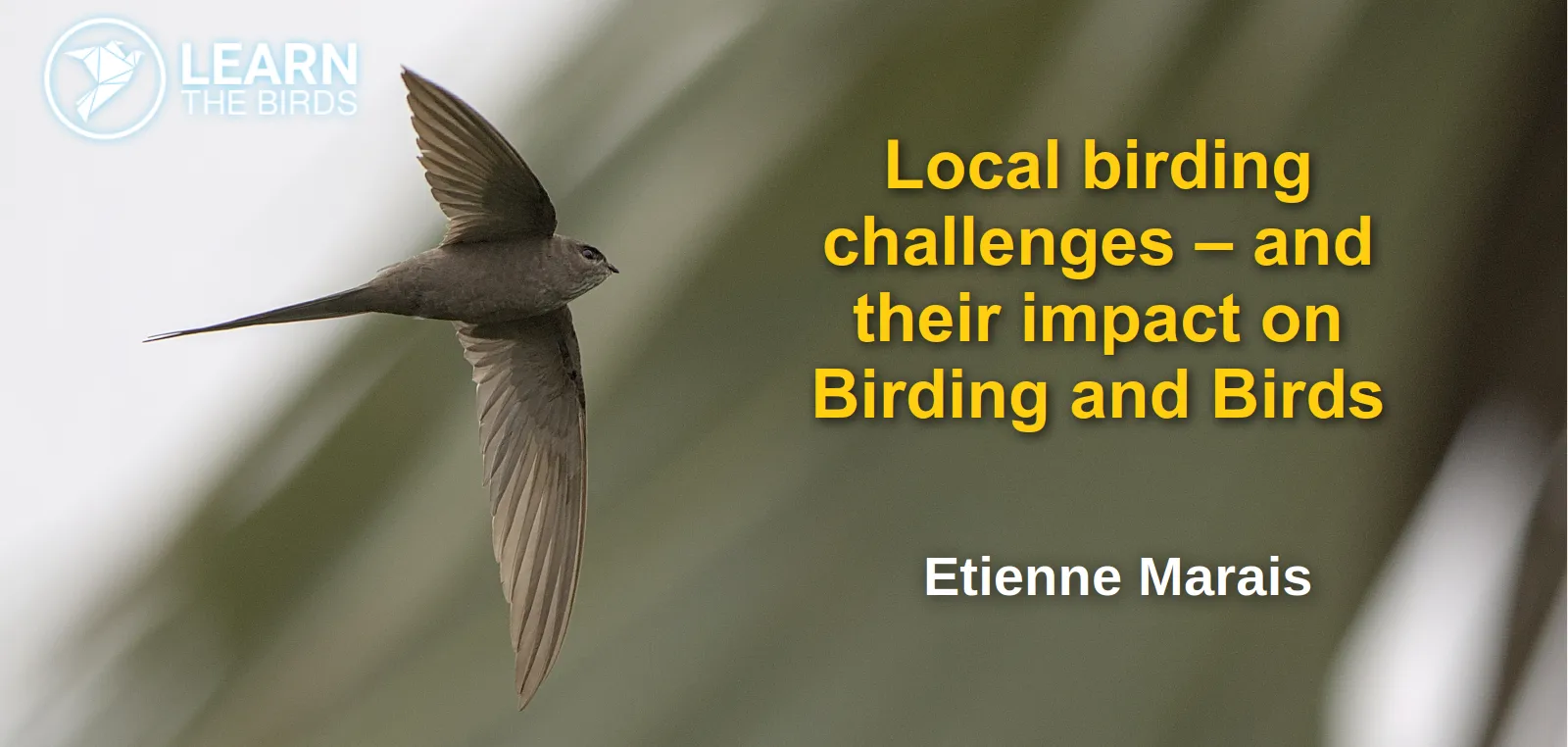
Etienne Marais

Etienne is one of South Africa's most experienced birders, a veteran guide and has been training birders for 15 years in an array of skills and specialities. He thinks deeply about the experience of birding.
View speaker page

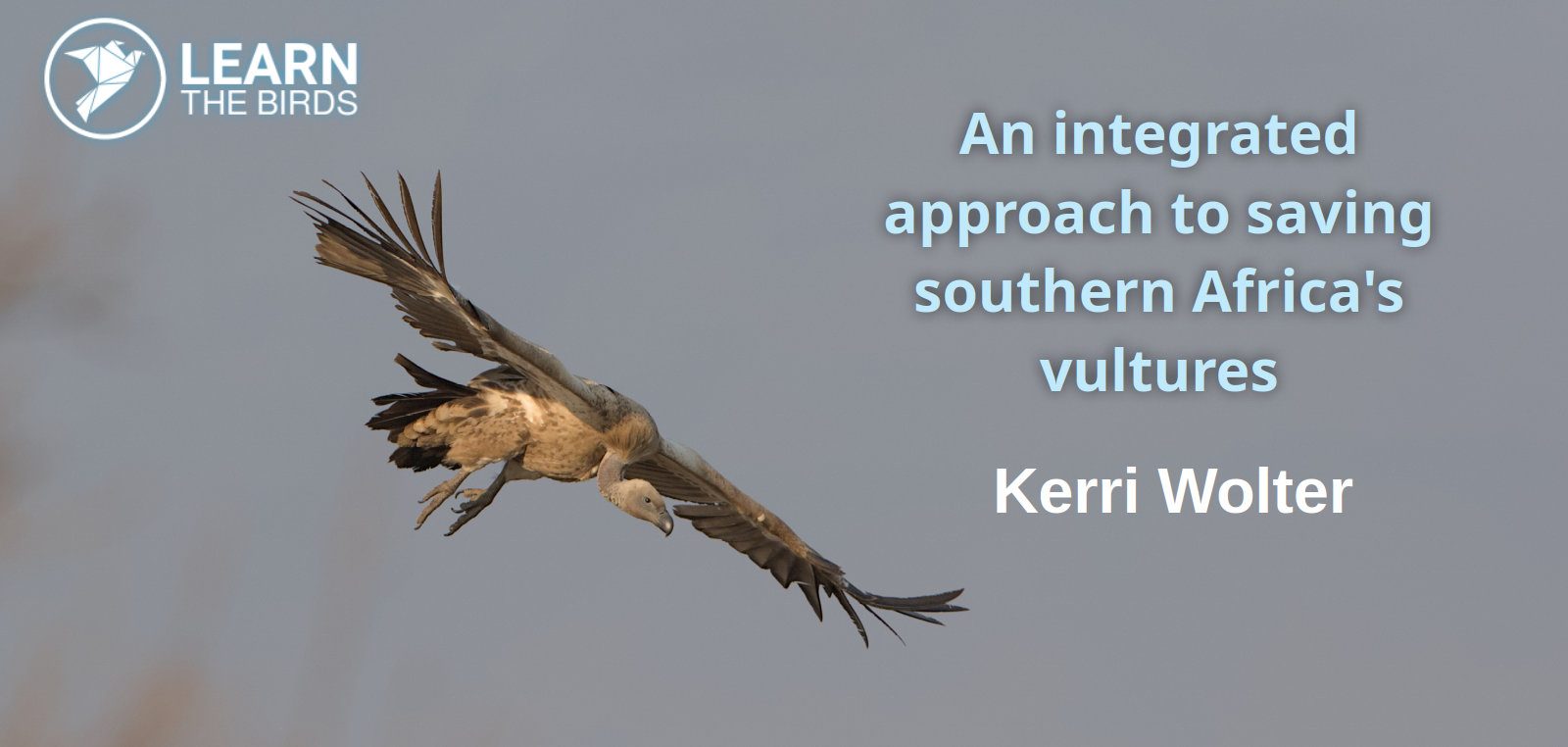
Kerri Wolter

After working in corporate for a few years, I was desperate to find my soul that had been lost in an air-conditioned office. My colleagues were too scared to brave the great outdoors or even enjoy the duck pond which our offices with immovable windows, overlooked. I applied for a position as manager of a vulture conservation group when the opportunity arose, not knowing anything about any bird species, and nothing could be further from my mind than vultures at that time. I thought this opportunity may just help get my foot into the door of conservation, and from there maneuver my way towards a more ‘desirable species’. After working in corporate for a few years, I was desperate to find my soul that had been lost in an air-conditioned office. My colleagues were too scared to brave the great outdoors or even enjoy the duck pond which our offices with immovable windows, overlooked. I applied for a position as manager of a vulture conservation group when the opportunity arose, not knowing anything about any bird species, and nothing could be further from my mind than vultures at that time. I thought this opportunity may just help get my foot into the door of conservation, and from there maneuver my way towards a more ‘desirable species’. To cut a long story short, after just a few short months in my new role, trying to save a species that the general public simply did not care about, I found myself looking down at a bundle of feathers and an ET look-a-like bird that resembled the prehistoric age of dinosaurs. My heart melted. I finally understood the magnificence and fragility of the species.  My task, at that exact moment, was as clear as daylight …. It was my calling. I needed to make people understand their beauty, and their importance in our world of greed and destruction; I was to become what I have now been nicknamed – “The Vulture Whisperer”.
View speaker page

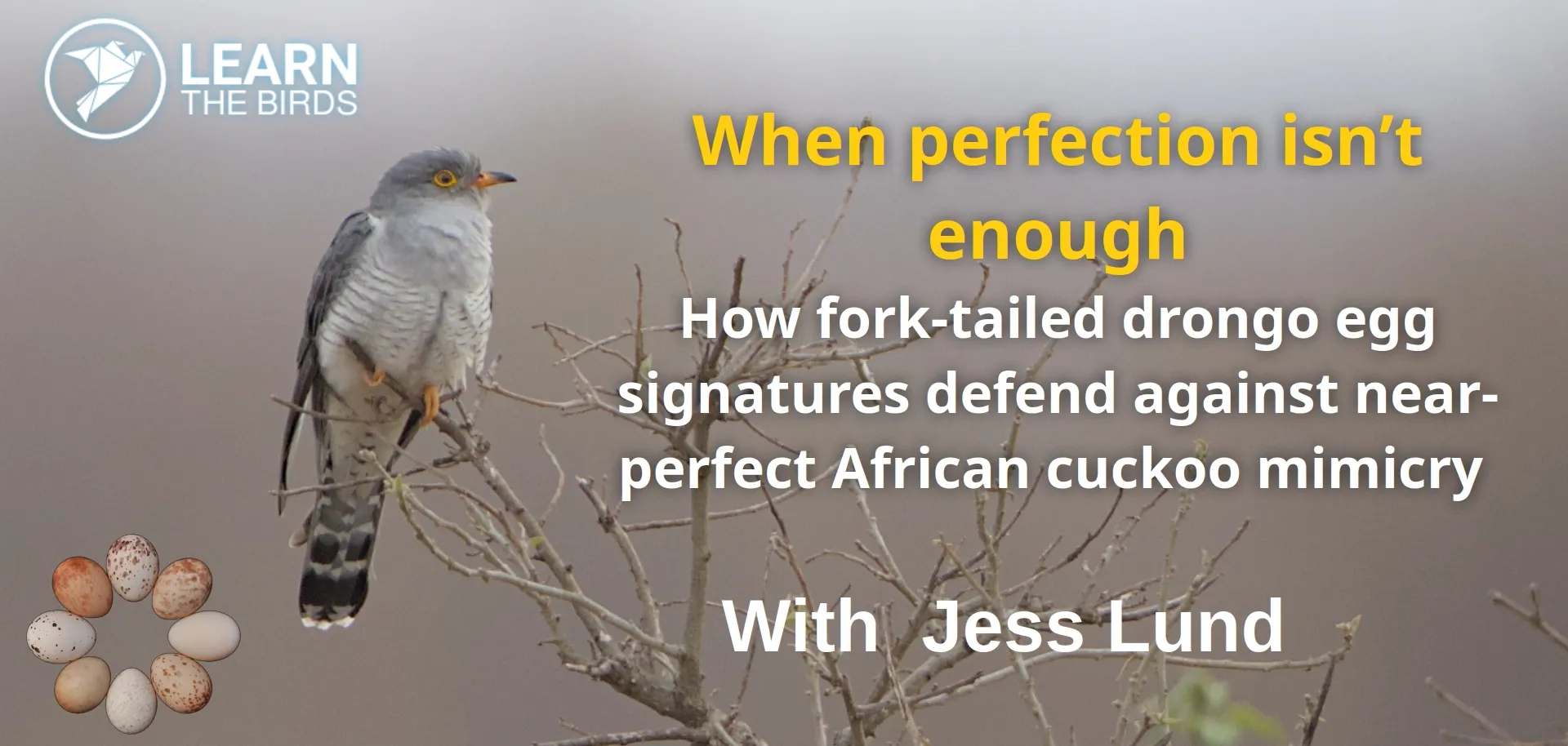
Jess Lund

Jess is an evolutionary biologist and has been studying brood parasites – namely African Cuckoos, Greater Honeyguides, and Cuckoo Finches – for five years. She grew up on a farm in Limpopo, where her passion for birds began, and went on to do her BSc and Masters at the University of Cape Town. She is now doing her PhD at the University of Cambridge, and is investigating how the early lives of brood parasites in the nests of their hosts can influence their lives as adults. More broadly, she is interested in the effect of species interactions on evolution, as well as how these interactions can generate evolutionary novelty. Despite currently being based in the UK, she spends as much time as possible in the field in Mozambique and Zambia, and remains unashamedly biased towards African birdlife.
View speaker page

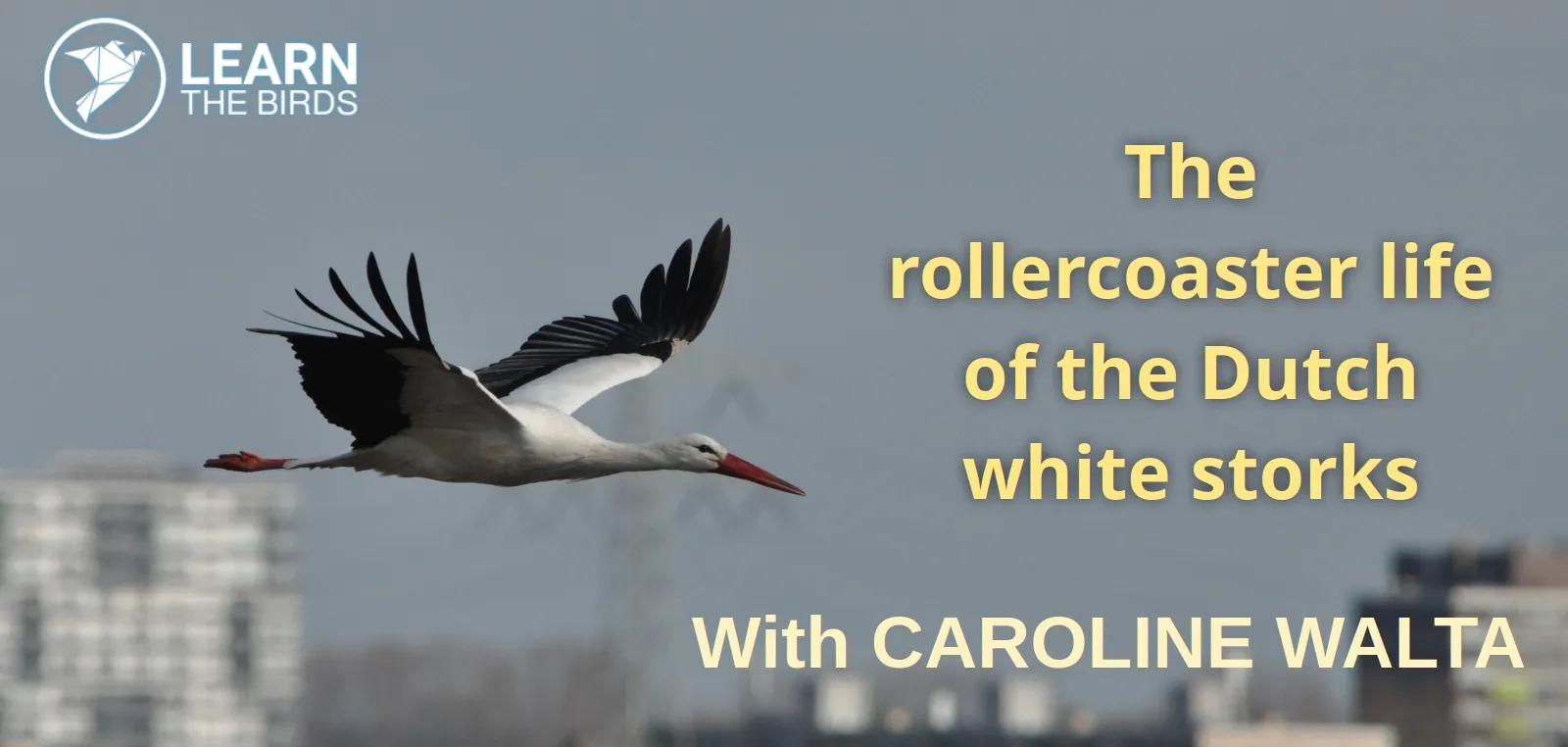
Caroline Walta

Caroline (1971) was already looking at birds from her cradle. As a child, she wandered through the neighbourhoods of The Hague with her binoculars, the early days of ‘urban birding’. Now she regularly spreads her wings to help with bird conservation projects all over the world. She nursed penguins in South Africa, trained amazon parrots on Bonaire and guided overland trips from The Netherlands to The Gambia, following the migrating birds. Meanwhile, getting a little addicted to ring reading: wherever she goes, she is scanning bird legs for bands. But she always returns to her nest, to ‘the one’ that brought her to this planet: the white stork. This species was almost extinct and mum had to take little Caroline to the zoo, to finally see this rare bird. Back then, she could never have dreamt that she would literally be standing at the cradle of baby storks. And she would be monitoring a growing stork population in her hometown. It is just the beginning of many feathered adventures... Caroline works as volunteer for the Association for Bird Protection of The Hague, Sovon Dutch Centre for Field Ornithology, Stork Research & Knowhow and the World of Birds Foundation. With her enthusiastic excursions, she helps people to discover that the world is one big bird paradise.
View speaker page

Prof Adrian Craig

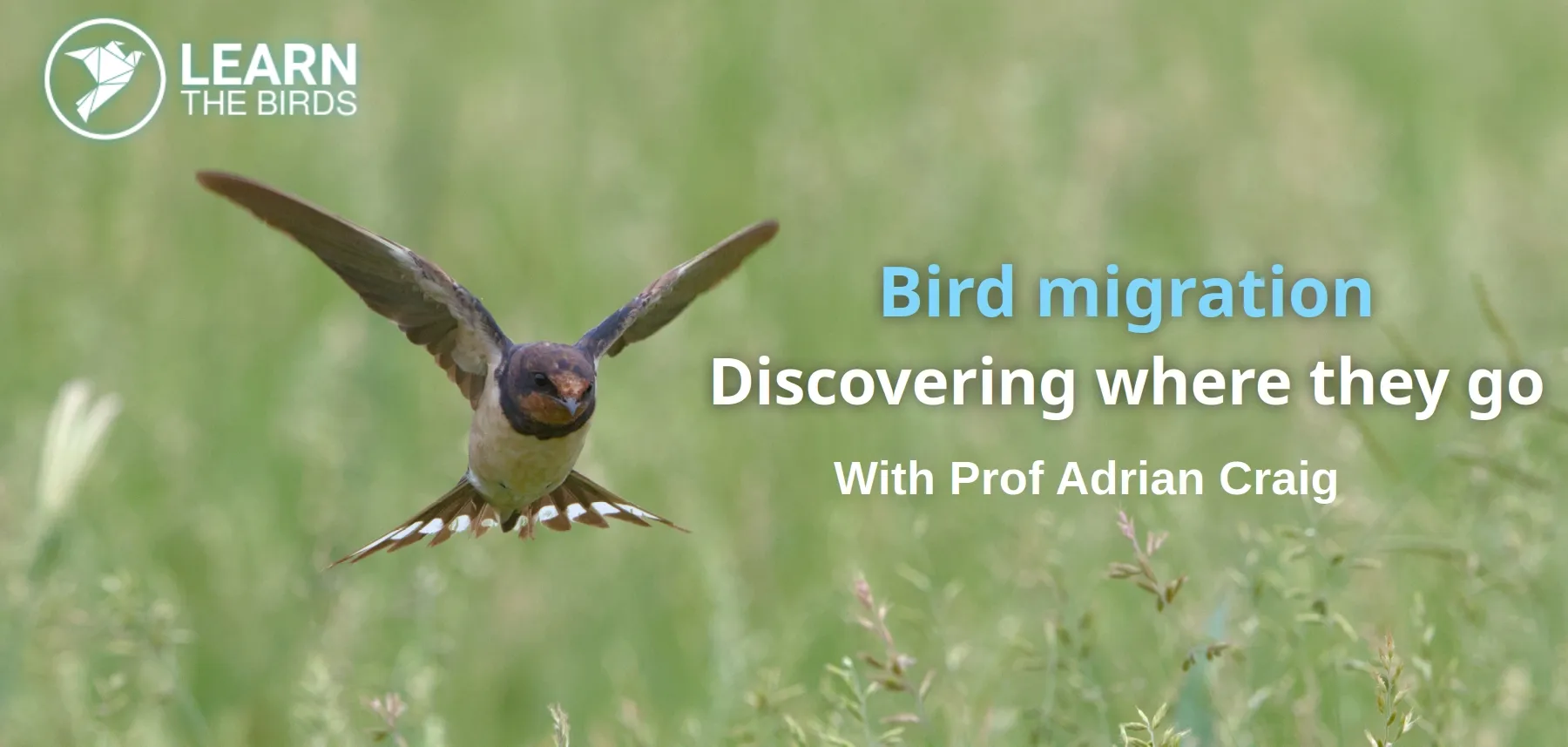
Adrian Craig is a retired professor of zoology, who spent his working career lecturing at Rhodes University in South Africa. He has also given many talks to school groups and other audiences. His research has always focused on African birds, involving field studies, museum specimens, and historical records. Apart from formal scientific publications, Adrian has written many popular articles for birdclub magazines, and contributed to handbooks such as “The birds of Africa” and “Handbook of the birds of the world”.

View speaker page

Christa Rolls

Christa RollsChrista Rolls is an Avian Ecologist and Conservation Biologist who loves birds and connecting others with their passion for birding. She started her career in avian ecology in Southern Indiana in 2012, and since then has had the opportunity to work on various projects in the Pacific Northwest, Germany, and, currently, California monitoring bird populations and behavior to help inform management decisions. Christa is also on the Board of Directors for Ecostudies Institute, a non-profit organization based in the Pacific Northwest that conserves wildlife and their habitats through science, restoration, and outreach. Most recently, in September 2020, she founded Birding Tools and hosts the Birding Tools Podcast, which breaks down all aspects of beginning birding, from finding the right pair of binoculars to learning how to find birds in the field.
View speaker page

Lynette Rudman

Lynette was a foundation phase and preschool teacher for 16 years. She currently writes, designs and creates fabric tactile books for blind preschool readers. Her book, Spider’s Web, won an international tactile book competition in 2009. She is passionate about education and teaching novice birders interesting facts about birds, interesting bird behaviour and bird vocalisations. She is an advocate for ethical birding practices and is not afraid to voice her opinion on this matter. In 2018 she received a merit award from the Grahamstown Rotary Club for her contribution to advancing birding in the Grahamstown area as well as the Eastern Cape Province. Having grown up on a farm and being close to nature all her life, she loves to share her passion for the natural world with others on the two Facebook groups that she created, Eastern Cape Birding and Southern African Bird Calls, and on her Youtube channel. Lynette is a keen photographer of wildlife, including birds, as well as macro photographing of insects and spiders.
View speaker page

Faraaz Abdool

Faraaz Abdool is an internationally published freelance conservation and wildlife photographer/writer who specializes in birds and the issues they face worldwide. He graciously serves on the Trinidad and Tobago Bird Status and Distribution Committee (formerly the Trinidad and Tobago Rare Bird Committee), and leads birding trips on both islands. Faraaz also runs yearly birding and wildlife tours to East Africa. Faraaz is also the author of “Casual Birding in Trinidad & Tobago”, an extensive volume designed to market T&T as an attractive and easy birding destination as well as to educate the local population about their avian cohabitants. Faraaz cultivates wildlife consciousness via his words and images, in a last-ditch attempt to reconnect humans with nature and save the world.
View speaker page

Dr Derek W. Keats

Derek was biology professor for over 20 years, and discovered several species new to science (not birds, alas), and even has a species named after him. His studies have encompassed ecology, systematics and phylogeny, as well as technology in education. He has published around 80 academic papers, and more than 100 magazine articles in which he has brought science and nature to lay persons. He has also been a university Deputy Vice Chancellor, held various technology roles in university and business, and is a technology geek. Derek is an accomplished nature photographer on land and under water, with his photos appearing in over 20 books, hundreds of magazines, several mobile apps, and museum exhibits. Today he works in FinTech, but prefers to spend time photographing birds  and unravelling their stories so he can re-tell them to humans. He is co-founder and looks after the technology and arrangements for Learn-the-Birds.
View speaker page

Wayne Humphries

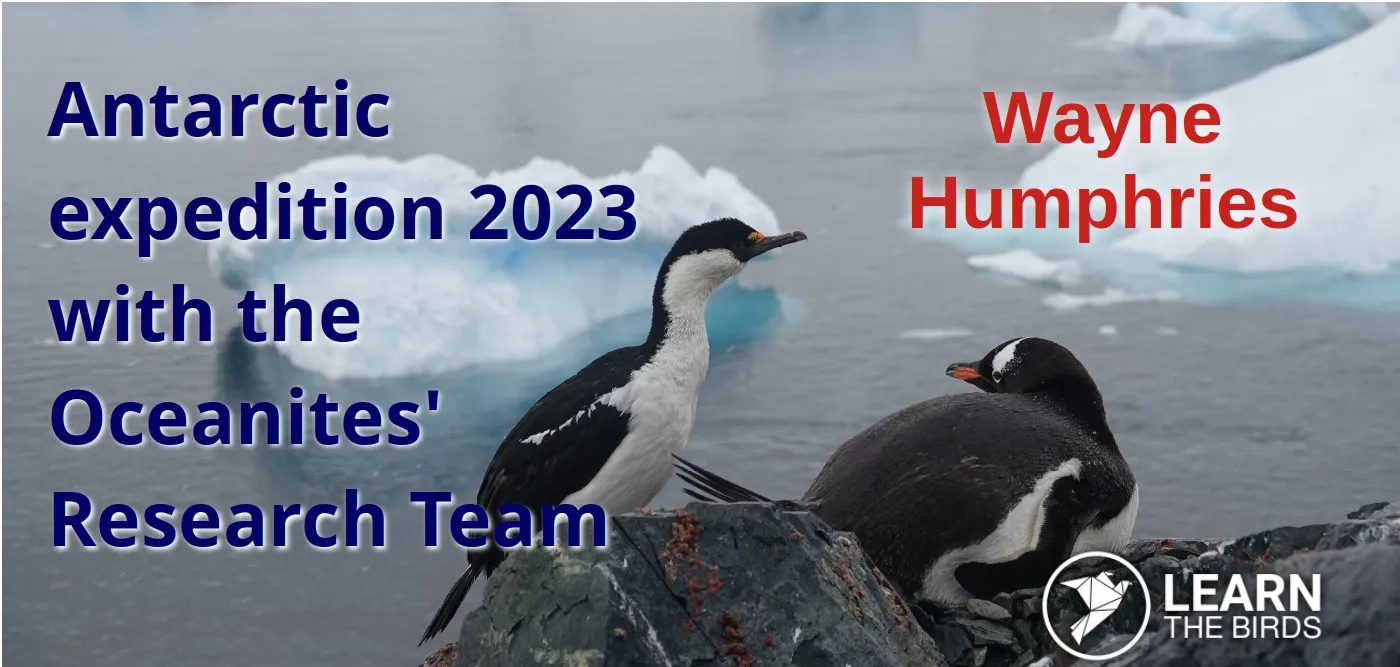
Wayne is of the firm belief that you are never too old to make a contribution to science and conservation nor does one often need to be a formal scientist to participate. Born in a small rural community in Newfoundland, instilled in him the passion for nature. As an avid naturalist, birder, kayaker, and wilderness hiker for over 40 years, Wayne has adapted to find ways to participate in conservation initiatives in diverse ways. Since retiring from a very successful career as Chief Operating Officer for a large Toronto based real estate development company, he decided to return to his passion for nature and returned to university to complete a Masters in Environmental Studies at York University in Toronto, Canada. His focus on conservation policy related to the environmental impacts on seabirds off Newfoundland, Canada has resulted in him being asked to undertake speaking engagements on conservation policy to a number of key organizations in Canada such as Memorial University of Newfoundland and Labrador, Birds Canada and the Toronto Ornithological Club, among others. Wayne continued his passion for nature by volunteering with his son and daughter-in-law to pilot test the use of advanced drones for penguin population research in Antarctica. As a part of the 2022-2023 Oceanites science team studying penguin populations on the Antarctic Peninsula, he was embedded into the Viking Octantis cruise ship Expedition Team. Science teams often use cruise ships to access the Antarctic and in return provide services-in-kind such as onboard lecturing, naturalists, expedition guides, etc. Wayne has gained added insights into research and the challenges faced in accessing these remote areas. His additional hobbies have included the martial arts, where he holds blackbelts in three differing martial arts styles, winter camping, ocean kayaking, and stained glass involving nature-based themes.
View speaker page

Elizabeth Szekeres

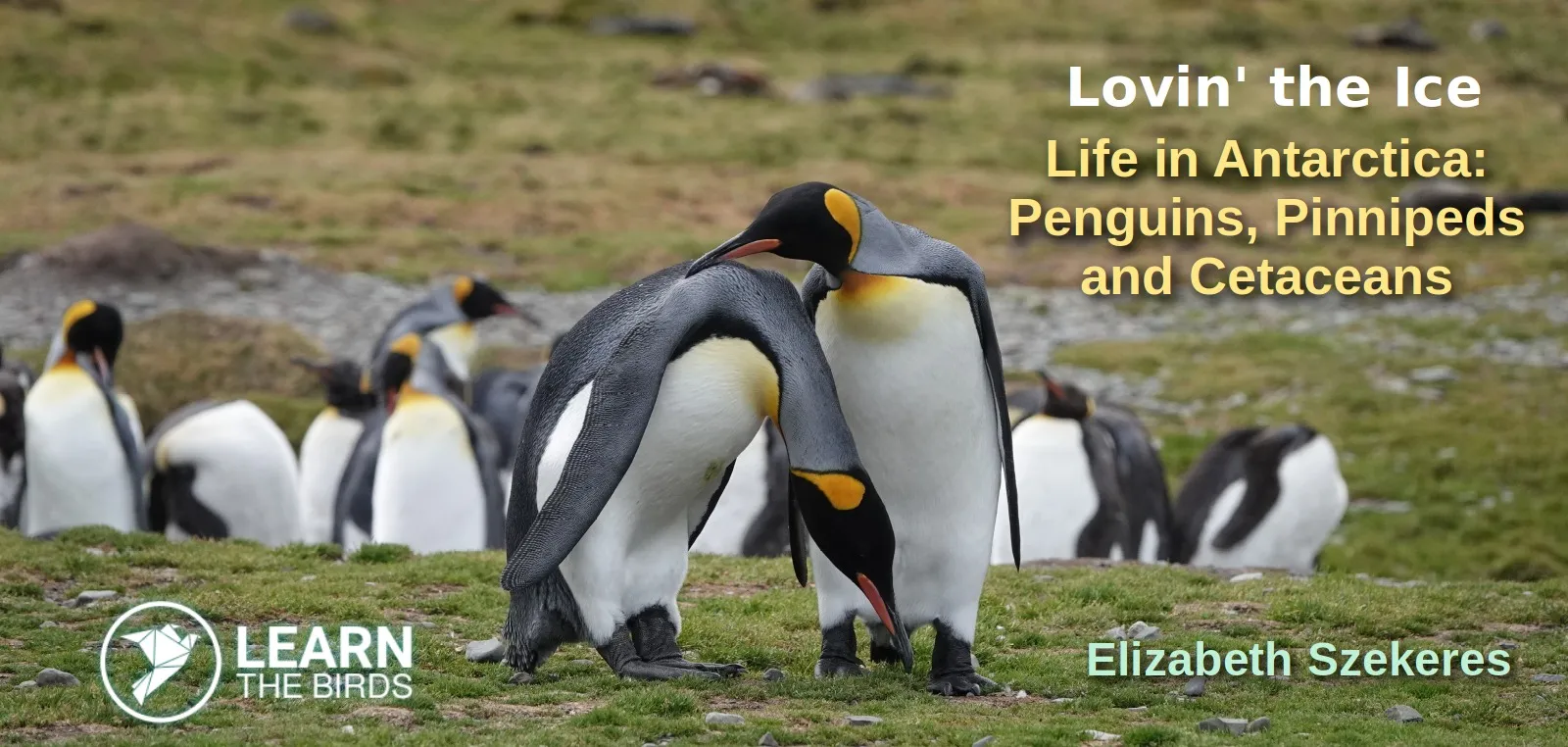
Elizabeth SzekeresElizabeth Szekeres (pronounced Sek-e-resh, all of the e's are short) is a geographer with a Master’s Degree in Environmental Studies. Born in England, she grew up in Canada with parents who were great walkers and nature lovers. Elizabeth was a free-range child, living close to the north shore of Lake Ontario. Rattray Marsh, the last intact wetland in the Greater Toronto Area, was her playground. Since Elizabeth retired from full time work in 2017, she has spent a lot of time traveling the globe to explore the natural world and observe birds. Prior to the COVID-19 pandemic, she visited New Zealand, Southern Africa, Hungary, Spain, Ecuador, California, Oregon, The Galápagos Islands, Costa Rica, Newfoundland, Baja California, Mexico and the Sea of Cortez. Once lockdowns were over, she returned to travel, visiting Newfoundland, and then second visits to New Zealand and Costa Rica. She continued with Antarctica, Iceland, Greenland and Costa Rica again in 2023, and then Belize, Guatemala and southern Alberta in 2024. Elizabeth writes the newsletter for her local naturalists’ club and loves to share her stories and photographs of the birds she observes. She presents regularly for nature clubs and seniors' centres in the Greater Toronto Area, and has been a previous contributor to the Learn The Birds webinar series.
View speaker page

Al Uy

Al Uy is Professor of Biology at the University of Rochester (NY, USA). Al was born and raised in the Philippines, moving to the US in his early teens. He received his undergraduate degree from the University of California at Berkeley, and his doctorate degree from the University of Maryland at College Park. Before joining the University of Rochester, Al held faculty positions at San Francisco State University, Syracuse University and the University of Miami. For over 25 years, Al and his team, the “Trop Bio Lab”, have explored the ecology and evolution of avian biological diversity, working in Australia, New Guinea and the Solomon Islands, as well as Ecuador, Panama and Costa Rica. His work in the Solomon Islands is featured in “Islands of Creation”, a documentary produced by the Smithsonian Channel and now available to stream through Paramount+.
View speaker page

Laura Kammermeier

Laura is the Marketing Manager for Birds of the World at Cornell Lab of Ornithology. She is a birder keenly devoted to birds and nature conservation and has a broad background in citizen science, marketing, and communications in the nature and travel industry. She led two large citizen science projects, including Project FeederWatch in the early 2000s. After that, she built a freelance marketing business that served a broad array of conservation nonprofits and travel companies. She began travel writing in 2008 and had the pleasure of watching birds and meeting birders in a dozen countries - she published in magazines and on her own birding travel website that described the world’s best birding travel hotspots. She returned ‘home’ to the Cornell Lab of Ornithology in 2018 to again serve bird conservation by bringing Birds of the World to a growing network of scientists, birders, nonprofits, and academic libraries around the world. Laura focuses most of her free time at home watching birds and “rewilding” her land back to nature.
View speaker page

Dr Derek Engelbrecht

Derek has always been passionate about the natural world, and this was nurtured by his parents, who always bought him animal books. After matriculating, he studied towards a BSc degree in Zoology and Botany at the then Rand Afrikaans University, followed by a BSc Honours in Zoology and an MSc in Zoology (Cum Laude). This was followed by a PhD in the conservation genetics of minnows in mountain streams.

Derek moved to Polokwane in 1992 when he assumed a position as a tutor in the Department of Physiology. In 2007 he switched his allegiance and joined the Department of Zoology at the University of Limpopo as an associate professor.

His research interests are varied, and he has supervised students in topics ranging from plant ecology to anatomy, but his main research focus and interest are birds, specifically larks. Beyond larks, he has published papers on a variety of other birds. He prides himself that he has the somewhat unique distinction of having published peer-reviewed scientific papers on all five vertebrate taxa: fish, frogs, reptiles, birds and mammals. To date, Derek has published 168 scientific and semi-scientific papers on various topics.

He serves on several national and international working groups for threatened taxa, such as the IUCN Hornbill Specialist Group, Southern Ground Hornbill Advisory Panel, Cape Parrot Action Group and Botha’s Lark Working Group. He is a registered A-class ringer with SAFRING and has ringed around 10 000 birds at the end of 2022. He is also the chairperson of the Limpopo Regional Bird Atlas committee and a longstanding member of Birdlife Polokwane where he serves on the club’s management committee. Derek is also on the editorial board of three scientific journals, Ostrich, Afrotropical Bird Biology, and Hornbill Natural History and Conservation, and is the co-editor of Birdlife Polokwane’s birding magazine, The Lark. He is the Editor-in-Chief of the 8th edition of Roberts Birds of Southern Africa, currently under revision in partnership with the Cornell Lab of Ornithology. Derek is a member of the E-birders, the winning team of the 2022 South African Birding Big Day, and also the current BBD record holders with 236 species recorded in 24 hours. In 2018, Derek was honoured by Birdlife South Africa when he received the Eagle-Owl Award for an Outstanding Contribution to the Conservation of Birds and Their Habitats.
View speaker page